
Psychology vs. Psychiatry: Understanding the Differences

Many people don’t know the difference between psychology and psychiatry. Both words start with "psych" and are often used interchangeably. But with different roles in a patient’s care, tools, and training, they describe two very different professions.
A Quick Guide to Psychology vs. Psychiatry
What is Psychology?
Psychology is the scientific study of the mind and behavior, according to the American Psychological Association. To understand how people think, feel, and act, psychologists follow strict rules. They start with questions, make predictions, test those predictions through experiments or studies, then share what they learn.
Researchers use surveys, observations, experiments, and case studies to gather information. Every conclusion comes from evidence they can measure and verify. When a psychologist helps someone, that help rests on years of research proving what actually works.
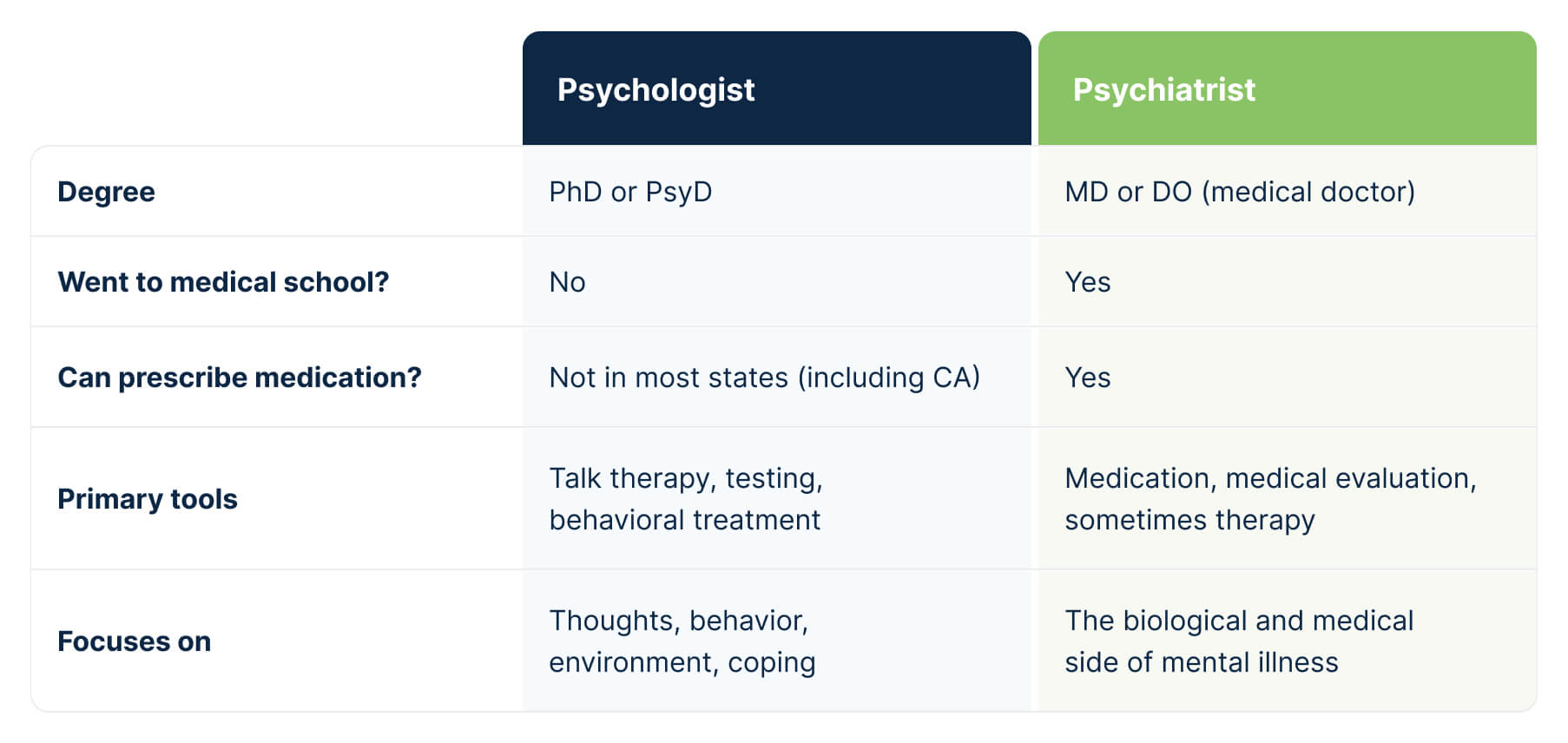
Becoming a psychologist requires earning a doctoral degree, either a PhD or a PsyD. That's followed by a long stretch of supervised work before you can practice independently. According to the American Psychological Association, a newly minted doctorate typically completes somewhere between 1,500 and 6,000 supervised hours and passes a national exam before earning a license, with the exact rules varying by state.
People come to a psychologist for a lot of the same reasons they might see a psychiatrist. Some have debilitating anxiety. Some are in a relationship with recurring problems. Some are suffering from grief.
In practice, psychologists rely on approaches such as cognitive behavioral therapy, along with psychological testing and behavioral interventions. They look at the whole picture: your relationships, habits, history and thinking patterns.
What Is Psychiatry?
Psychiatry is the study of mental, emotional, and behavioral health. Psychiatrists are medical doctors (MDs or DOs) who specialize in mental health and have spent years in medical school and psychiatric residency learning how the brain, body, and behavior interact. As licensed physicians, psychiatrists are qualified to prescribe and manage psychiatric medications.
A psychiatrist examines your mental health as a physical system that can be studied, tested, and treated. Psychiatrists can order lab work and psychological tests based on what you tell them in a session.
People come to psychiatry for all kinds of reasons. Some are dealing with something sudden like a panic attack, hallucinations or thoughts of suicide. Others have had a prolonged sense of sadness or lack of control.
Treatment looks different from patient to patient. Psychiatrists draw on multiple treatment approaches, including medication management, talk therapy, lifestyle modifications, and psychosocial support. Finding what works usually takes some trial and error.
Psychology vs. Psychiatry: The Core Differences
Training. Psychiatrists go to medical school; psychologists go to graduate school in psychology. The American Medical Association emphasizes that this is more than a formality — a psychiatrist's medical education covers the body, not just the mind, which shapes how they read symptoms.
Treatment approach. Psychologists tend to treat through therapy and behavior change. Psychiatrists tend to treat through medication and medical management, though plenty weave in therapy too. Neither approach is "better.” They're built for different problems.
Prescribing authority. Psychiatrists can prescribe everywhere. Psychologists generally cannot, but that's slowly changing. As of 2024, seven states allow specially trained psychologists to prescribe after completing additional graduate coursework in clinical psychopharmacology.
Where the Two Fields Overlap
People occasionally view this field as a rivalry with psychology, but they share common ground: both professionals diagnose conditions, follow strict ethics, and help patients function better.
They frequently share patients in real clinics. A psychiatrist manages the medication while a psychologist handles the weekly therapy, and the two coordinate. This combination – medication plus therapy – works better than either treatment by itself for moderate-to-severe conditions.
Which One Do You Need?
- Start with a psychologist or therapist if you're struggling with anxiety, depression, grief, etc., and looking for support and a safe space to talk them out.
- Start with a psychiatrist for severe symptoms, suspected medication needs, a prescription that didn't work before, or a medical issue to rule out.
When you're not sure, your primary care doctor is a reasonable first stop; they can point you toward the right kind of specialist.
A Note on Care for Older Adults
There's one population where getting this right is especially important: older adults living in nursing homes and skilled nursing facilities. Mental health conditions like depression, anxiety, and cognitive change are common in these settings and easy to overlook, because it's tempting to write symptoms off as "just getting older." They aren't. They're treatable.
The catch is access. Residents of a nursing home or SNF usually can't hop in the car to visit a psychologist's office, and coordinating specialty mental health care on top of everything else a facility manages is difficult.
Where Pacific Coast Psychology Fits In
This is exactly the gap Pacific Coast Psychology was built to close. Rather than asking vulnerable residents to travel, Pacific Coast Psychology brings mental health care directly to nursing homes and skilled nursing facilities across California — meeting residents where they already are.
For facilities, that means residents get consistent, on-site psychological support without the logistical concerns of outside appointments. For families, it means peace of mind that a loved one's emotional and cognitive health is being looked after by professionals who understand the realities of long-term care. And for residents, it simply means help arrives at the door.
If your facility or your family could use that kind of support, reach out to Pacific Coast Psychology to learn how on-site mental health visits work.
